
Leaks
Tracing water back to where it actually enters the roof, rather than patching the ceiling stain and hoping. The entry point and the drip are often nowhere near each other.
Leaks, blown-off shingles, flashing, pipe boots and valleys on sloped, shingled homes. The roof gets looked at from up top — not the driveway — and you get a straight answer on whether it wants a repair or a replacement. The look is free.
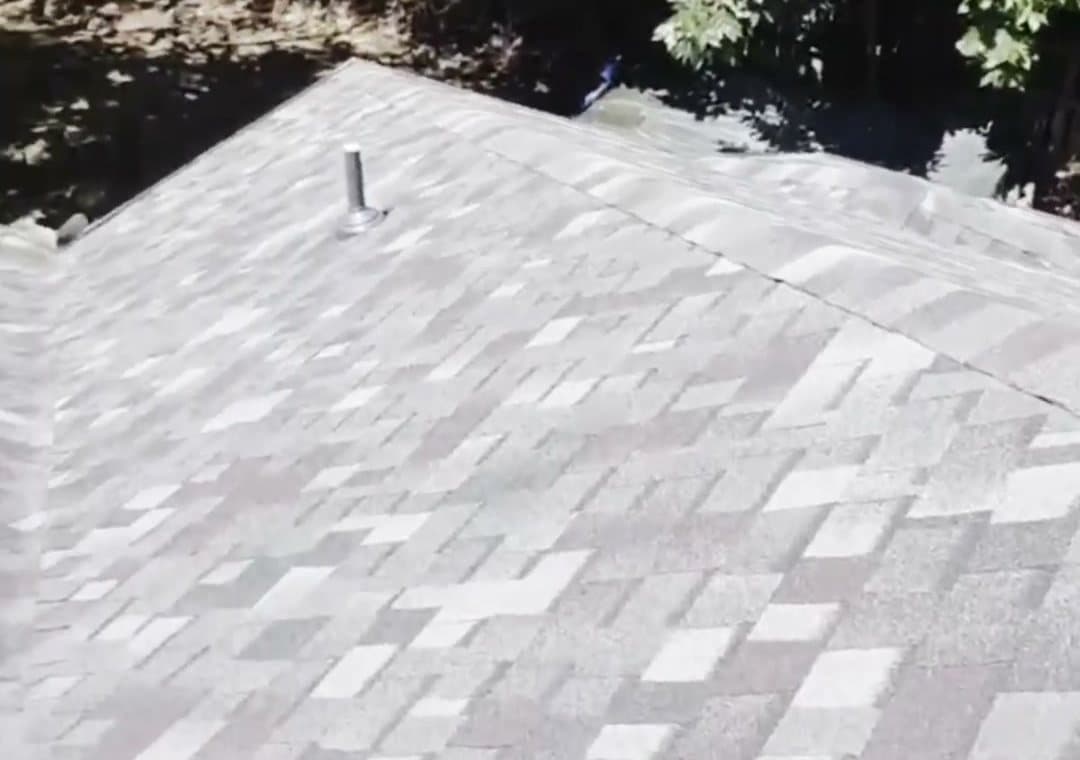
Shingle fields rarely give out first. The water almost always finds a detail — something that was cut, sealed or nailed badly, or something that has simply aged out ahead of the rest of the roof.
Tracing water back to where it actually enters the roof, rather than patching the ceiling stain and hoping. The entry point and the drip are often nowhere near each other.
Shingles torn off or creased by a Missouri wind event, and the run of shingles around them that got loosened at the same time.
Step flashing along walls, chimney flashing, and the counter-flashing above it. A common source of long, slow leaks that get blamed on the shingles.
Rubber boots around plumbing vents crack and split years before the shingles do. Cheap to replace, expensive to ignore.
Where two roof planes meet and all the water goes. Badly cut or worn valleys are a classic repeat-leak location.
Ridge cap, ridge vent and the intake that has to balance it. Bad ventilation quietly shortens the life of everything above it.
Dylan is a replacement roofer first. Repairs are part of the job, not the whole job — so if a repair is genuinely the right call for your roof, he’ll say so, and if it isn’t, he’ll say that instead of selling you a patch that buys six months.
Nothing about a repair should start with a price. It starts with somebody getting up there and looking, because the difference between a small repair and a whole roof is usually invisible from the ground.
If the roof has damage that looks storm-related, say so when you call — that changes the conversation, and there’s a separate page on how storm and insurance work.
A stain on the ceiling, shingles in the yard, a drip in the attic after heavy rain. Where and when it shows up is genuinely useful information.
Looked at up close, not assessed from the driveway. Photos of anything worth showing you.
Repair, replace, or leave it alone for now. All three are real answers and you'll get whichever one is true.
Scope and number written down before any work starts, so nothing appears on the invoice that wasn't discussed.
It depends on what's actually wrong and how much life the rest of the roof has left. A few blown-off shingles on an otherwise sound roof is a repair. Widespread granule loss, brittle shingles or repeated leaks in different places usually isn't. You get the honest read either way, from the roof rather than the driveway — including 'leave it alone for now' if that's the answer.
More often than not it's a detail rather than the shingle field — pipe boots that have cracked, step or chimney flashing that has pulled away, a valley that was cut badly, or nail pops. Finding the actual entry point matters more than patching the spot where the water shows up on your ceiling.
No. The inspection is free, including after a storm. You get a straight answer about what's up there whether or not there's work in it for us.
No. Sobczak Exteriors works on sloped, shingled residential roofs only. If yours is flat or commercial, Dylan will tell you on the phone rather than sending someone out.
The 10-year workmanship warranty applies to a full roof replacement installed by Sobczak Exteriors. For a repair, ask Dylan what he'll stand behind on that specific job — he'll tell you plainly, before the work starts.
Free inspection, an honest read on what’s wrong, and no push toward a replacement you don’t need yet.